
Busan trade deal at three months: Why we’re cautiously optimistic on US-China relations
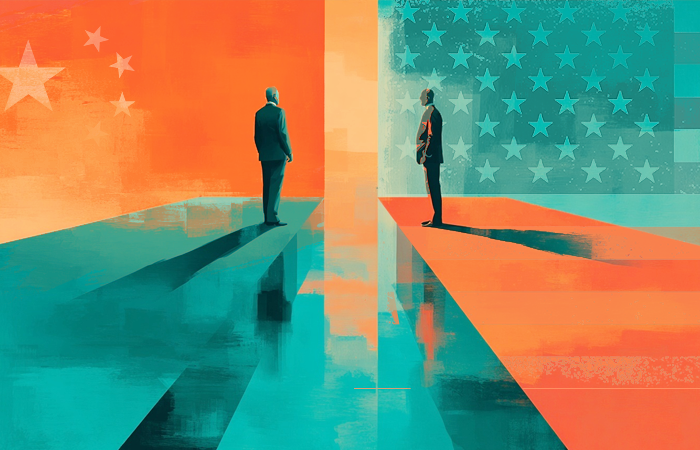
What a year, huh?
- Captain, it’s January.
To say 2026 has been off to a volatile start geopolitically is putting it lightly.
- From abducting the Venezuelan president, to threatening to annex Greenland from a NATO ally, to a bevy of new tariffs (both real and threatened), the Trump administration has been ~*subverting expectations*~ globally.
- This uncertainty sent a ripple (or tsunami) of unease through the global elite at Davos and has prompted spurned American partners to shore up ties with China.
That’s why we’re pleasantly surprised by just how…well…quiet US-China relations have been in recent weeks.
ICYMI: Back in October, Presidents Trump and Xi met in Busan, South Korea, calling a time-out on an on-again-off-again trade war and agreeing to a series of de-escalatory measures.
- Most notably, China agreed to approve “general licenses” for exports of rare earth products.
Since then, the post-Busan follow-through has gone remarkably smoothly.
- Asked about China on the sidelines of Davos last week, US Treasury Secretary Scott Bessent registered his satisfaction with progress on trade issues.
- Bessent said that Chinese exports of rare earth magnets were “flowing as expected,” with a “fulfillment rate in the 90s, which I think is quite satisfactory.”
- He also said Beijing had lived up to its promise to buy US soybeans, another major plank of the truce.
And Bessent’s opinion carries weight: He’s reportedly been made the Trump administration’s point man on all things China.
- As China czar, Bessent – a relatively steady hand – will be well positioned to tamp down on the sort of policy entrepreneurship within the US government that nearly torpedoed a previous iteration of the trade truce.
And it’s not just Bessent. The administration’s entire approach to China now seems to have shifted toward not rocking the boat – and maintaining positive momentum.
- In December, the office of the US Trade Representative (USTR) chose not to impose Section 232 tariffs on Chinese semiconductors for at least 18 months.
- Earlier this month, the US Commerce Department approved Nvidia’s high-end H200 AI GPUs for export to China – and Beijing now appears to have approved their import.
Changes to governmental org charts are also telling: Last week, the WSJ scooped that the Commerce Department’s Bureau of Industry and Security dismissed two officials from the Office of Information and Communications Technology and Services (OICTS) responsible for countering tech-related threats from China.
- This suggests a more relaxed approach to “the China threat” than we’ve seen in a long time.
And the change in attitude may have some serious legs: We think the Busan truce has a very decent shot of holding up for its initial one-year duration, especially if Trump’s planned April visit to Beijing goes well and Xi reciprocates with a US visit later in the year.
Having said all that, nothing should be taken for granted.
- Major disagreements remain at the heart of the Sino-US economic relationship, any one of which could disrupt the fragile balance seen over the past three months.
That’s why companies should take advantage of this moment of stability to address vulnerabilities in their China-linked supply chains – such as diversifying critical mineral supplies – while we are not actively in the midst of a crisis.
- While things are stable now – and we think that stability will last through 2026 – it’s only a matter of time before another crisis hits at some point, even if it’s not until 2027 or beyond.
- By then, though, it will already be too late to make the necessary adjustments – so best to make hay while the sun shines.
Joe Mazur, Head of Geopolitical Research, Trivium China