Local officials push for rethink of consumer goods trade-in subsidies
Local finance officials are joining policy advisors in questioning the effectiveness of China’s consumer goods trade-in program.
On April 26, Economic Observer reported on city-level finance officials' proposed changes to the two-year-old scheme.
Some context: The program has been losing momentum.
- In 2026, the subsidy budget was cut by RMB 50 billion to RMB 250 billion, and eligible categories were reduced from 12 to 6.
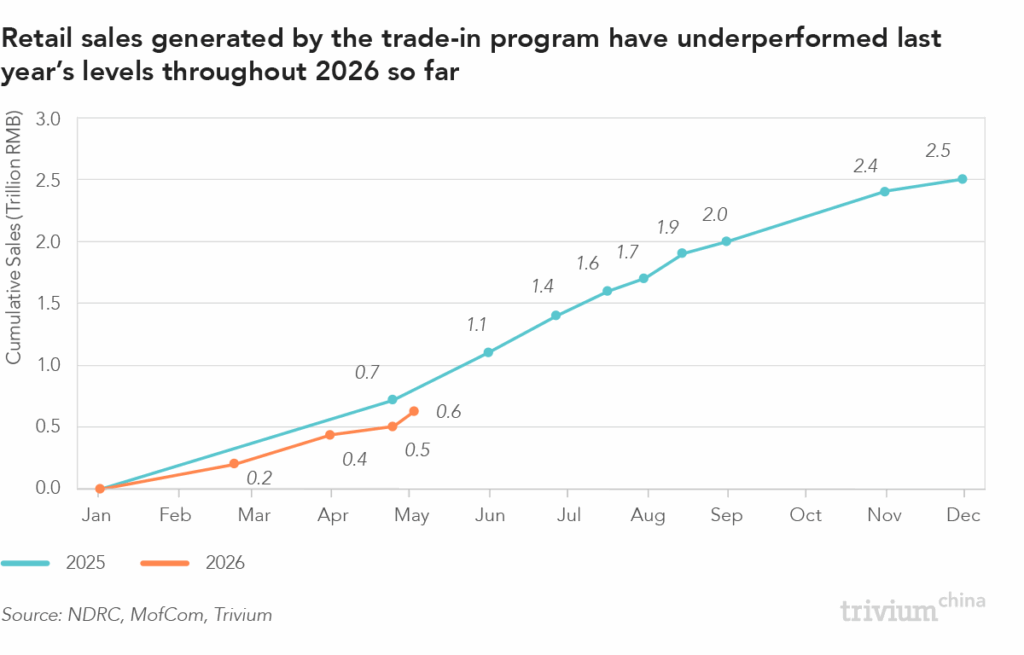
- Sales generated by the program have consistently underperformed last year’s levels.
A finance official from an economically developed eastern province called for:
- Shifting subsidies away from durable goods such as autos and appliances toward high-frequency services like dining, tourism, and retail
- Reducing mandatory local matching requirements tied to central subsidies
Get smart: Frustration with the program reflects the divide between central and local incentives.
- Beijing prioritizes durable goods because manufacturing supply chains span provinces, overcapacity in autos and appliances needs to be absorbed, and manufacturing remains strategically important for industrial stability and tech innovation.
- Local governments, especially in top-tier cities, prefer to support services because these boost employment and local tax revenue.
Get smarter: Beijing is unlikely to redirect major fiscal support toward services while manufacturing capacity utilization remains low.
- That leaves local governments to fund service sector subsidies largely on their own – something most lack the fiscal capacity to do.
Our take: Service sector support is likely to remain limited until industrial utilization improves or services deflation becomes severe enough to force Beijing’s hand.